
With three kids, I know how much advice comes with each new stage. For a parent starting purees, I want to make the practical steps easier to sort through: readiness, a safe setup, and following the baby’s cues. This is general information to use alongside your baby’s clinician’s advice, rather than a feeding plan for every child.
Signs Your Baby is Ready to Start Solids
Before you start introducing purees, it’s important to ensure your baby is ready for solid foods. Here are some signs to look out for:
- Head Control: Your baby should be able to hold their head up steadily.
- Sitting Up: They should be able to sit up with minimal support.
- Curiosity: Your baby shows interest in what you’re eating and tries to grab food.
- Loss of Tongue-Thrust Reflex: This reflex, which pushes food out of the mouth, should be diminished.
- Readiness is not appetite alone: Extra hunger or night waking does not establish readiness for solids.
- It’s typically around 6 months of age that babies start showing these signs, but every baby is unique. If you’re unsure, consult with your pediatrician.
Best First Foods to Give Your Baby
When it comes to first foods, purees are a popular choice. They are easy to swallow and digest. Here are some great options for your baby’s first purees:
- Single-Ingredient Purees: Start with simple, single-ingredient purees like mashed bananas, avocados, or sweet potatoes.
- Vegetables: Pureed carrots, peas, and butternut squash are nutrient-rich and easy to digest.
- Fruits: Apples, pears, and peaches can be steamed and pureed into a smooth consistency.
- Grains: Offer a variety of iron-fortified infant cereals, such as oat, barley, or multigrain, rather than relying only on rice cereal. Mix to a suitable texture with breast milk or formula.
When introducing new foods, always offer them one at a time and wait a few days before introducing another. This helps you monitor for any allergic reactions.
How to Set Up for the First Feeding
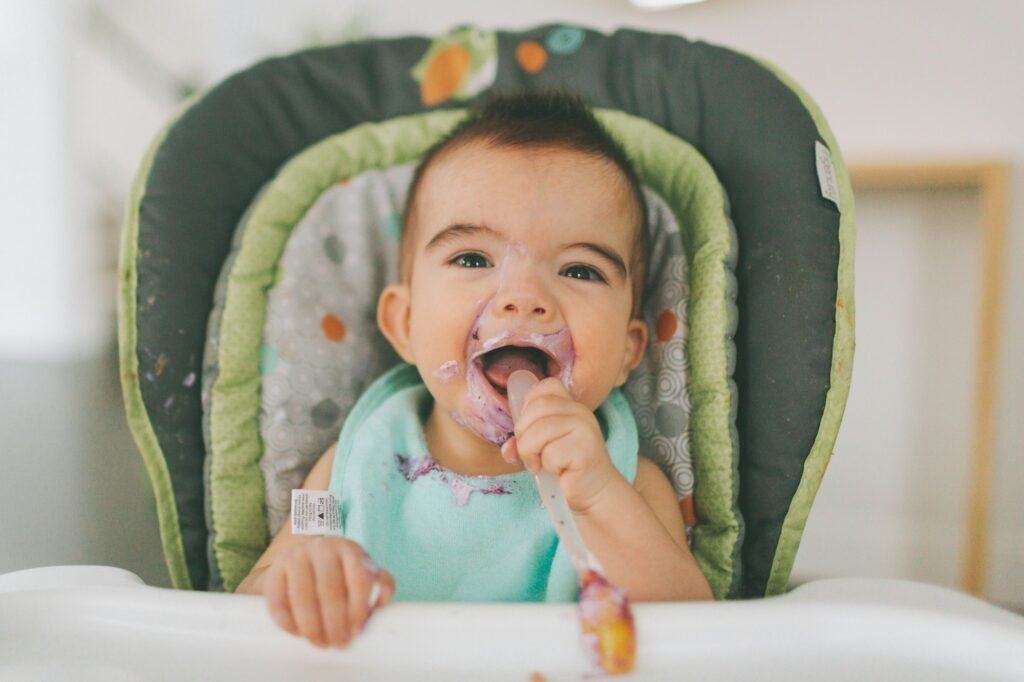
Seat your baby upright in a supportive high chair and use its restraints as directed. Offer a small amount on a suitable spoon when they’re alert. Allow time to explore; stop if they turn away or close their mouth. Keep milk feeds in place and expect some mess.
Store-bought versus Homemade Pureed Foods
Deciding between store-bought and homemade purees can be challenging. Both options have their pros and cons:
Store-Bought Purees
- Convenience: Ready-to-eat purees save time and effort.
- Consistency: Store-bought purees are smooth and consistent in texture.
- Variety: Available in a wide range of flavors and combinations.
Homemade Purees
- Control: You have complete control over the ingredients and can ensure there are no additives or preservatives.
- Cost-Effective: Making your own puree can be more economical in the long run.
- Customization: You can tailor the textures and combinations to suit your baby’s preferences.

High-Risk Allergy Foods — When & How to Introduce Them
Potentially allergenic foods can be introduced alongside other complementary foods in suitable forms. Ask your clinician for an individual plan if your baby has a known allergy or severe eczema.
Timing: Introduce high-risk foods like peanuts, eggs, dairy, and seafood around 6 months of age. Small Amounts: Start with a small amount and monitor for any reactions. Supervision: Always introduce these foods at home and when you have time to observe your baby for a few hours. One at a Time: Introduce high-risk foods one at a time, with a gap of several days in between. If your baby has severe eczema or an egg allergy, ask their clinician when and how to introduce peanut safely. A known food allergy needs an individualized plan. Never offer whole nuts or thick spoonfuls of nut butter.
Fluid & Nutrient Needs
As you introduce purees, it’s essential to keep in mind your baby’s fluid and nutrient needs:
Breast Milk or Formula: Continue offering breast milk or formula as the primary source of nutrition. Purees should complement, not replace, milk feeds. Water: Ask your baby’s clinician about age-appropriate amounts once solids begin; water does not replace breast milk or formula. Balanced Diet: Ensure your baby gets a variety of foods to cover essential nutrients like iron, calcium, and vitamins.
Feeding Techniques
Feeding techniques can significantly affect how well your baby accepts purees. Here are some tips:
Start Slow: Begin with a small spoonful and gradually increase the amount. Follow Cues: Watch for signs that your baby is full or still hungry. Babies usually turn their heads or close their mouths when full. Encourage Self-Feeding: As your baby gets used to purees, offer opportunities for self-feeding with a spoon. Consistency: To establish a routine, try to feed your baby at the same times each day.
Common Challenges
Introducing purees can come with its own set of challenges. Here are some common ones and how to address them:
Refusal to Eat: It’s normal for babies to refuse new foods. Keep offering the same food multiple times, as it can take several tries for them to accept it. Messiness: Feeding a baby can be messy. Use a bib and highchair cover and be prepared for some clean-up. Gagging and choking are different. Always supervise feeding with your baby sitting upright. Choking can be silent; inability to breathe, cry, or cough needs immediate first aid and emergency help. Learn infant choking first aid before starting solids.
Building a Healthy Relationship with Food
Sit with your baby and offer food without pressure. Let them decide whether to take another bite. A refused spoonful isn’t a failed meal; you can offer the food again another day.
Do not give honey before 12 months. Breast milk or infant formula remains the main drink through the first year; cow’s milk can be used in foods, but not as the main drink before 12 months.
Further guidance: CDC guidance on introducing solid foods. General parenting information does not replace individualized care from your child’s clinician.
For the next step, see my guide to toddler mealtime ideas for the next stage.
For more on getting ready for the first year, browse Baby Essentials.
Discover more from I'm Your Village
Subscribe to get the latest posts sent to your email.